
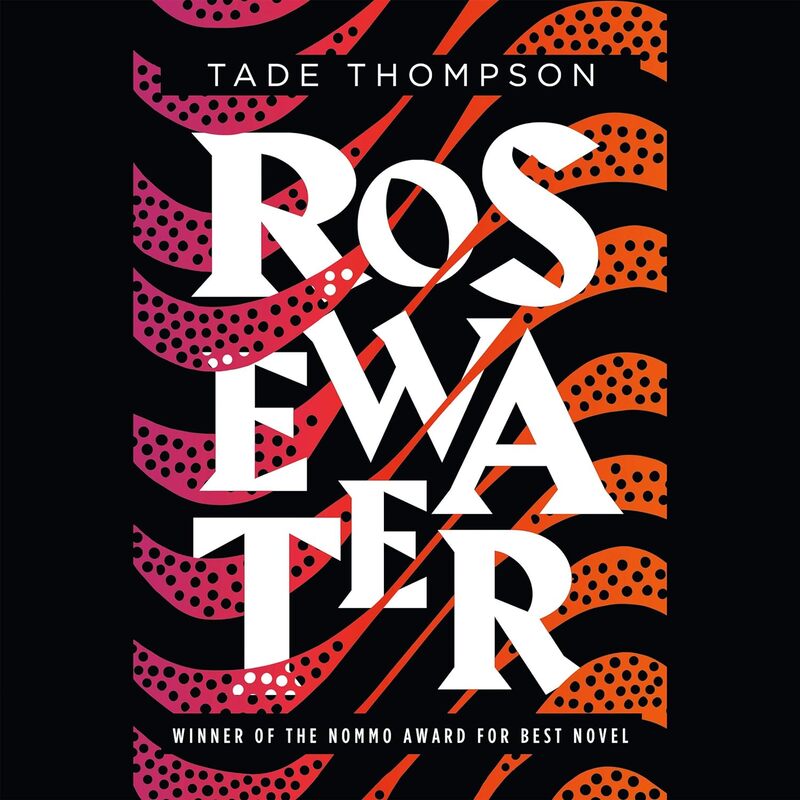
 Tade Thompson’s Rosewater is one hell of a book, science fiction plus thriller plus horror. The prose is superb and the characters are uncommonly well developed.
There is so much plot going on here, so much, that I will not attempt a plot summary. It’s the year 2066, the aliens have landed in Nigeria, and consequently a few people are psychic now. That’s all you need to know. One scene stopped me in my tracks, and I do mean that literally. I was walking Revvie and when I finished listening I stopped, said “Holy shit” aloud, and rewound to listen again. For those who’ve already read it, I am of course referring to the part where the starving carnivorous floating alien gets loose. Last time I read a scene that good was in Cormac McCarthy’s The Road, when the father and son stumble across the horror basement. That’s the level of Holy Shit I’m talking about. The main character, Kaaro, is a dickhead. That’s also a risky move, but I hope I’m making clear that Tade Thompson has the storytelling chops for it. I’d also like to point out that we follow each other on Bluesky, which makes us best friends, basically. The prose is excellent. That’s the most important thing to me in any book, the wordsmithing. And the audiobook is a joy. I just looked up the narrator to confirm that Bayo Gbadamosi is from Nigeria, surely he must be with that accent but nope, he was born in London. Anyway the narration is terrific, though at some point I need to go back and read the book in print. What with all various times and dimensions and plot line, I need to be able to flip back and forth on the page. If violence is difficult for you to read, this is not the book for you. Cannot overstate that enough. I’m normally unfazed by fictional violence, but woof, this book got my attention. I learned about a form of death involving tires and unfortunately there is no way to unlearn that. I will have this knowledge forever. Also skip this book if you don’t like reading hot alien sex. Otherwise, strongly recommended.
0 Comments
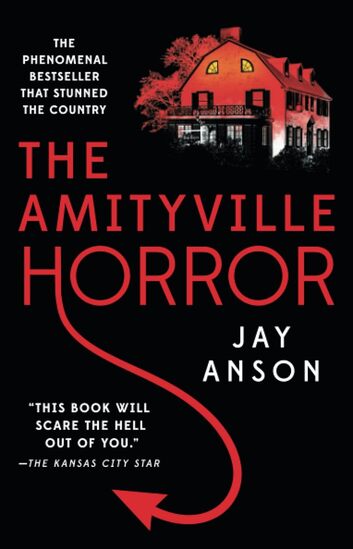 Things have been intense recently. I've barely had time to read or listen to anything, so I'm cheating and using a nonfiction book I read ten years ago, The Amityville Horror (1977).
In 1974, a house in Amityville, NY was the site of a several gruesome murders. In 1975, a family of five moved in: two parents, three kids. They lasted not quite a month before fleeing in terror. Jay Anson describes the haunting in detail while allowing the reader to choose their own interpretation. If you are a skeptic about paranormal phenomena, you can walk about with your doubts intact (though perhaps slightly weakened). If you are a devout Catholic, you can read about the priest's attempted exorcism without feeling trivialized. To my own great regret, I am impervious to terror from written horror. Too much Stephen King, too young, ruined everything else for me. I am pretty sure though that normal people find this book scary, and I can truthfully say that it is atmospheric and entertaining. And for audiobook enthusiasts, Ray Porter's voice is gritty and noirish, the perfect delivery for the story. 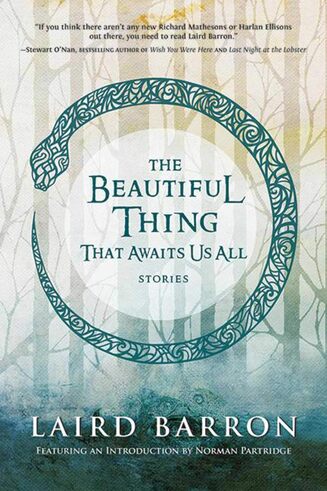 Laird Barron writes horror with more literary flair than normal, like Henry James but with satanists. In more contemporary terms, his style reminds me of John Langan or John Horner Jacobs, people who take care with their prose but who aren't afraid to throw around shapeshifters or occultists to keep the peasants in line.
The Beautiful Thing That Awaits Us All is a collection of longish short stories set primarily in the American Pacific northwest. My favorite was "The Hand of Glory," which reads more like prohibition noir than horror, at least till the twist at the end. If you've ever enjoyed one of Stephen King's gangster stories, you'll like this--same boozy atmosphere where life may be cheap but the dames ain't. Are these stories scary? My scare meter broke a good thirty years ago. The same way chronic smokers can't taste spice in their curry, I can't detect terror in my fiction. But I found them enjoyable, especially as narrated by the hardboiled voice of Ray Porter, who also did a standup job with the Amityville Horror. More on that next week, I think... 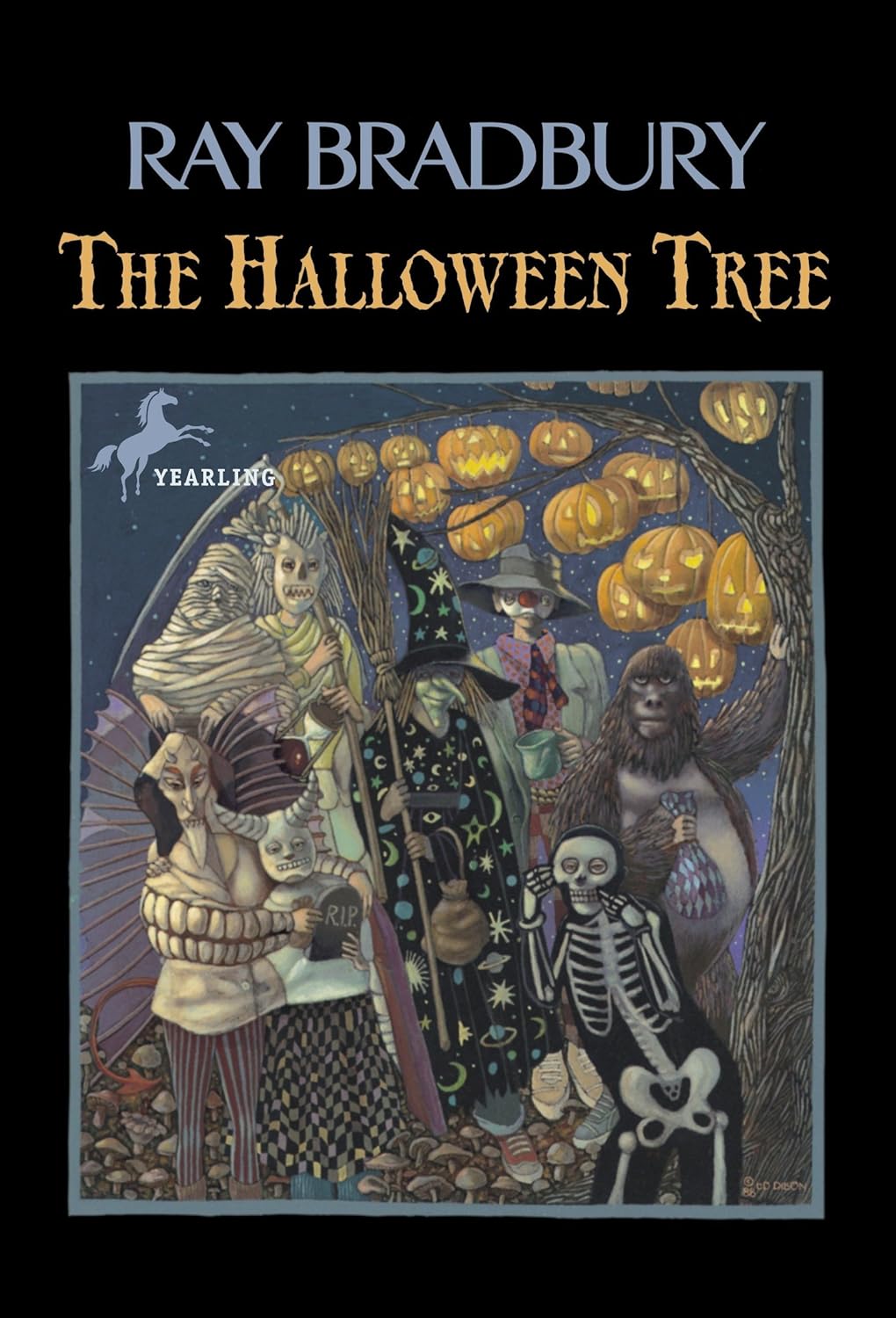 Though best remembered for Fahrenheit 451 and The Martian Chronicles, Ray Bradbury wrote across many genres and for many ages. The Halloween Tree (1972) is a horror/fantasy Young Adult novel that I probably would have enjoyed as a kid. Alas.
One Halloween, a group of eight boys find themselves taking a spooky tour across space and time to learn the origins of Halloween, which [insert convoluted, unconvincing plot explanation here] is necessary to save the life of the ninth boy, Pipkin. Bradbury lavishes praise on Pipkin, using over-the-top descriptions to paint him as the best possible boy to have ever walked the earth. I was reminded of Melville's ultra horny descriptions of Billy Budd. There is nothing sexual in Bradbury's portrait--I cannot point to any one line or paragraph that is inappropriate--but taken together, I felt uncomfortable about the intense scrutiny and effusive compliments directed toward an adolescent. Maybe someone else who's read this book can let me know if I'm being too sensitive. So I can't really say I recommend it. Kirby Heyborne did a great job narrating, though, considering there were ten characters and none of them were women. |
Book talks
When Covid first hit, I started doing book talks on social media as a way to keep in touch with people. I never got out of the habit. I don't discuss books by my clients, and if I don't like a book, I won't discuss it at all. While I will sometimes focus on craft or offer gentle critical perspectives, as a matter of professional courtesy, I don't trash writers. Unless they're dead. Then the gloves come off. Archives
February 2024
Tags
All
|
 RSS Feed
Proudly powered by Weebly