
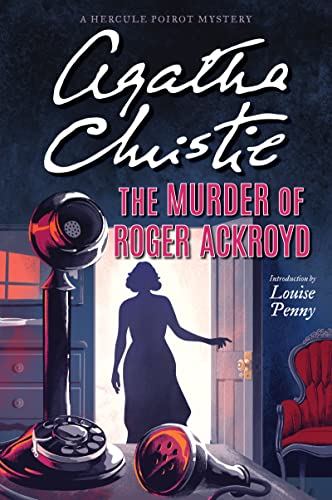
 Retired from the Brussels police force, M. Hercule Poirot has settled into obscurity in a sleepy little English town--but when a wealthy local man turns up murdered, he is not exactly reluctant to get back into detective work.
I admit I did not guess whodunnit. I had to wait like everyone else gathered in the parlor to learn the identity of the killer. Christie eventually tired of Poirot, but the public clamored for him. He is eccentric and pompous, with quite a high opinion of himself, but justifiably so. I don't feel moved to read the Miss Marple books, but I think I'll read some more Poirot mysteries. I recommend the audiobook narration by Hugh Fraser (who played Captain Hastings to David Suchet's Poirot).
0 Comments
My Sister, the Serial Killer, by Oyinkan Braithwaite  My Sister, the Serial Killer is a slender little thriller about the complicated love between sisters. Korede is older and plainer, working as a nurse in Lagos. She's a compulsive cleaner, and she has a secret crush on Tade, an eligible doctor at her hospital. Ayoola is younger and gorgeous and she's just finished killing a boyfriend--the third time this has happened. Her claims of self-defense sound hollow, considering her complete lack of remorse. Sensible older sister Korede has to stop Ayoola from posting happy selfies when she's supposed to be mourning a missing boyfriend.
And then the beautiful, dangerous, probably psychotic Ayoola sets her sights on the handsome doctor. There are some dark themes along with the dark humor. If you don't like reading violence, this is not the book for you! But on the unlikely chance you've wondered what it would be like, mixing Shirley Jackson's We Have Always Lived in the Castle with the movie Arsenic and Old Lace, you have an answer! Nigerian author Oyinkan Braithwaite delivers something a little different from dainty murders in the English countryside. I enjoyed it as an audiobook, read by Adepero Oduye. 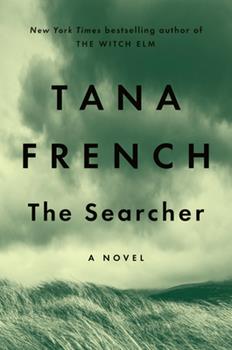 Tana French is the best contemporary crime writer. As someone who reads only moderately in mysteries/thrillers/suspense, I probably shouldn't be so bold, but she is so dang good, is the thing.
The Searcher is not quite a police procedural, because Cal Hooper is retired from policing. He has moved from Chicago to a smudge on the map in Ireland, wanting to spend his days in easy solitude. This solitude is interrupted by a local teenager whose elder brother has gone missing. Cal finds himself working a missing persons case, though without the benefit of the contemporary tools of law enforcement. French has an uncommonly good prose style. She's an exceptional storyteller with an ear for accents and atmosphere. She creates magnificent characters. As with Tamsyn Muir, she is attractive in photos in addition to being preternaturally talented. This is unacceptable. Do better. Roger Clark was such a good narrator, moving seamlessly between Irish and American accents, to where I couldn't guess his native country. Turns out he was born in America but moved to Ireland. The audiobook is a pleasure. 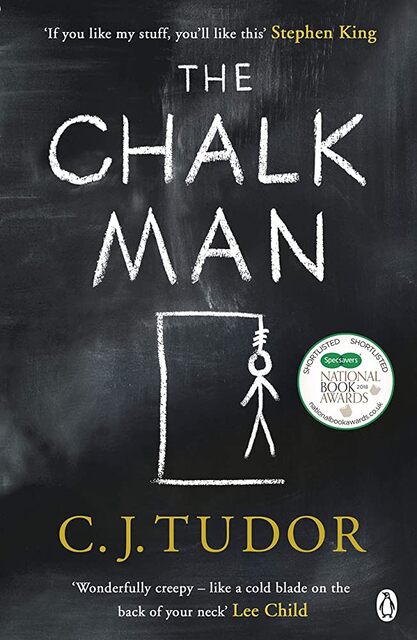 A version of this post originally appeared on May 13, 2023.
In C. J. Tudor's thriller The Chalk Man, the teenaged narrator and his mates* stumbled upon a gruesome murder in the 1980s. Now an adult, the narrator drinks too much and struggles to fit in. When one of the lads* from his past reappears, claiming to know the identity of the killer, old memories resurface, and a new body is found. This book reminds me of my own thriller, a primary difference being that this one is published and mine is not. Both alternate between the present day and 30ish years ago; both feature mothers turning up alive after everyone thought they were dead; both feature a similar tone and prose style; and both have some squicky scenes designed to make the reader uncomfortable. Plot and action scenes are important to any crime novel, but not every writer makes you care about the characters. A couple of craft observations: first, Tudor uses dream sequences. This is the prerogative of the writer, but it's a risky move, because lots of writers skim right past. Dream sequences can be frustrating because we don't know which details are relevant. Second, when one of the characters is walking around the house at night in socks, Tudor uses the verb "padding" to describe the movement. I never realized how clichéd this is until one of my writer friends pointed it out. Now you too can annoyed when characters pad about. Because this novel reminds me so much of my own, I naturally want to recommend it, with the caveat that there are scenes of physical and sexual violence. *it's set in England. I'm allowed to say that.  A version of this post originally appeared on April 29, 2023.
I enjoy the occasional mystery, but I'm no aficionado. That would be my mother. Imagine my surprise when I was able to introduce her to the Inspector Ian Rutledge series, starting with A Test of Wills. After serving in the Great War, the inspector has returned to Scotland Yard, now with a bad case of shell shock. He is haunted by Hamish, a man he killed, though he dare not tell anyone. Societal attitudes toward PTSD in 2023 are still bad, but back then it was tantamount to moral failure and cowardice. Now Rutledge must resume his career with Hamish intruding in his thoughts. Charles Todd (pseudonym for mother/son team Caroline and Charles Todd) knows how to write a British mystery. In the early chapters, Rutledge drives from London to a stately old English manor. He exits the car and notices a curtain twitching on the second floor. You can picture it, can't you? You've seen this a hundred times on the BBC. And the first person Rutledge interviews is a beautiful woman who seems to be keeping secrets. One quibble: occasionally the point-of-view character (usually Rutledge, sometimes others) will see someone's facial expression and deduce a range of precise emotions, something like "her eyes flashed, and he could sense indecision mixed with grief and anger." That's borderline cheating as a way to give information to the POV character. I'm not singling out Charles Todd: loads of authors do this, and it's hardly the gravest sin. Another quibble: on a plausibility scale, where 1 is The Butler Did It and 10 is It Was Aliens, this book comes in at 9. I consulted my mother (who inhaled the whole series within a week) and she says the other mysteries are similarly difficult for the reader to solve. If you're okay with outlandish explanations, there's a whole bunch of books in this series to enjoy. I listened to the first one on audio, narrated by Samuel Gilles. 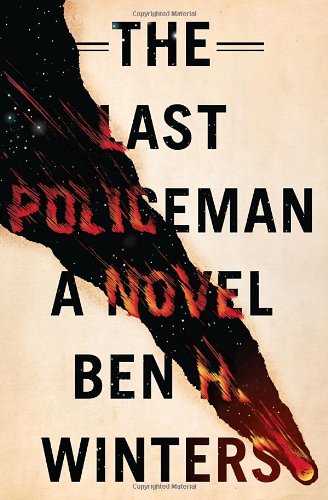 A version of this post originally appeared on April 8, 2023.
All I knew of The Last Policeman (2012) was that it got a lot of acclaim. Also I figured it for a crime novel. There is a clue for this hypothesis hidden in the title. There's an asteroid coming toward the earth, though it's still several months from impact. Society is collapsing in fits and starts. Lots of people are choosing to check themselves out before impact, but the corpse in the McDonald's bathroom stall seems like a murder, and detective Henry Palace is determined to investigate it, even as the structures of law enforcement (like habeas corpus) disintegrate. I would have enjoyed this book more pre-pandemic, but I no longer need help imagining how people respond to global threat. I'm good. Still though, this is a decent way to spend your time: Police procedural, society under threat, noirish feel, mild science fiction. I especially recommend it for people who like a literary feel to their genre fiction. Peter Berkrot narrates the audio. 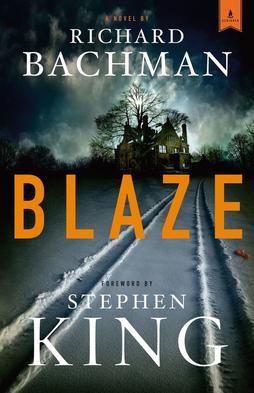 A version of this post originally appeared on January 7, 2023.
Having finished my re-read of Stephen King's collected works of short fiction, I'm catching up on the novels I've missed in recent years, starting with Blaze (2007). King wrote this under his pseudonym Richard Bachman, partly because the prose style is so different from his normal style, which is conversational, luxuriating in details and subplots. For this noir crime novel, the prose is taut and lean, reminiscent of Jim Thompson (The Killer Inside Me). Blaze is a likeable, earnest main character with cognitive impairments, due to brain injuries from an abusive father. The violence done to him in childhood by his father, foster parents, and the headmaster of the orphanage explain why he goes on to do violence to others. He doesn't mean to hurt anyone. He just doesn't know any other way. King, or Bachman rather, was inspired by Steinbeck's Of Mice and Men, so if you want an uplifting book maybe try something else. It's a fine book, not one of King's masterpieces, but recommended for anyone who likes the dark, dirty, gritty subgenre of crime writing. |
Book talks
When Covid first hit, I started doing book talks on social media as a way to keep in touch with people. I never got out of the habit. I don't discuss books by my clients, and if I don't like a book, I won't discuss it at all. While I will sometimes focus on craft or offer gentle critical perspectives, as a matter of professional courtesy, I don't trash writers. Unless they're dead. Then the gloves come off. Archives
February 2024
Tags
All
|
 RSS Feed
Proudly powered by Weebly